


Note: This article is the first in the Ideology & Essays section, which includes theoretical discussions, subjective analysis, cultural commentary, and more that aren’t nonpartisan policy discussions.
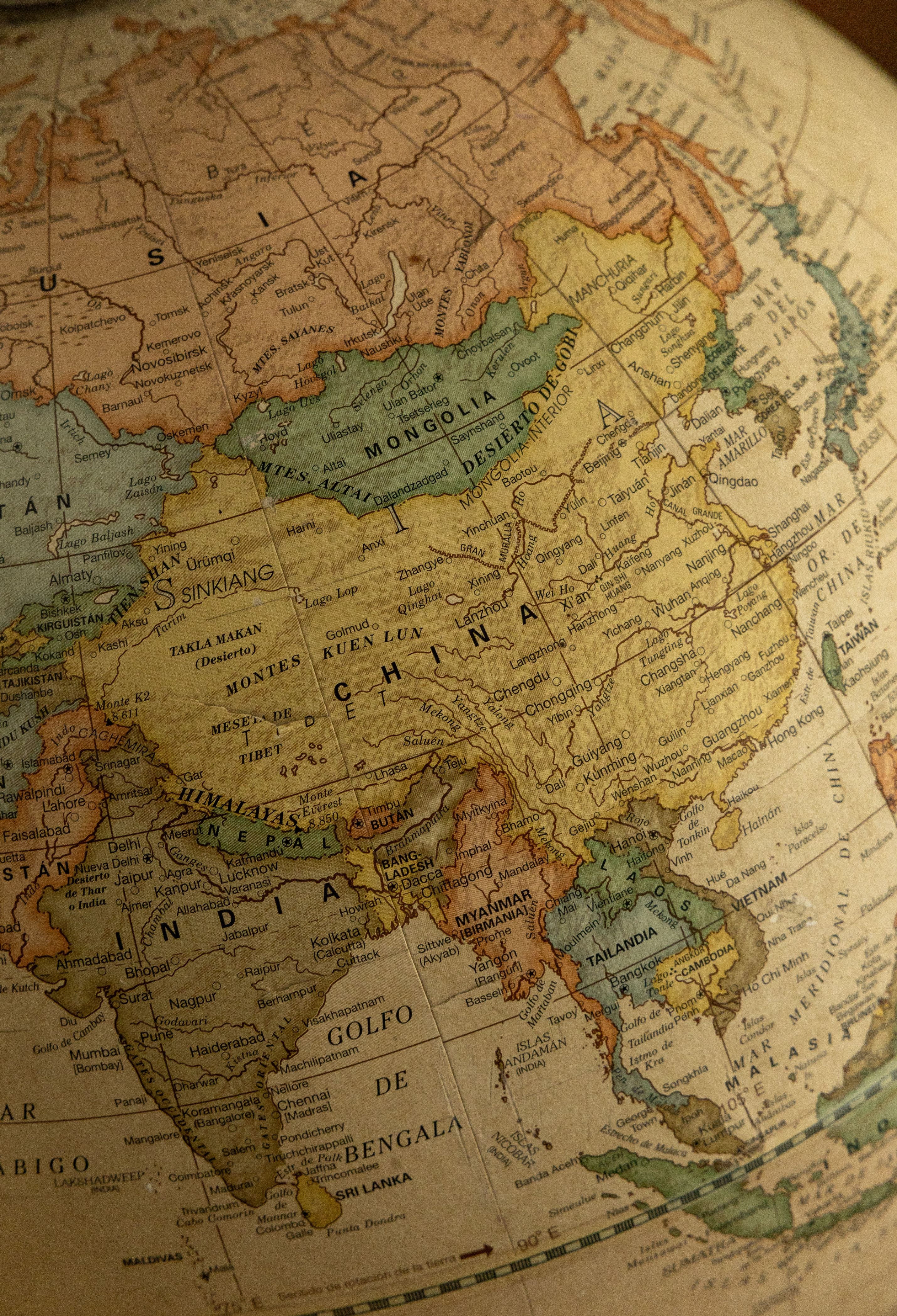
The world’s strongest-ever display of soft power, without a doubt, comes from the Sinosphere — the region of Sinic cultural influence roughly encompassing Greater China (Mainland China, Hong Kong, Macau, and Taiwan), Vietnam, Korea, and Japan. Cultural exports coming from this region, particularly from China, Korea, and Japan, have spread far and wide, influencing culture in regions across the world.
But within the decades-long internationalist ardor inspired by these very cultural influences, a larger problem exists. China’s political apparatus, and by extension, the broader Sinosphere, represents the ultimate realization of utilitarian secular statecraft.
Though the U.S. is often viewed similarly as a secular nation, this is arguably inaccurate, as Christian influence on policy-making is historically certain and remains (to an extent) in modern times. Functionally, Christianity is core to American culture and identity.
Christian moral law can guide the nation toward a divinely inspired destiny, but increasing Sinic influence poses numerous risks to this path. To circumvent these risks, it is necessary to examine the actual features within the Sinosphere that are fundamentally adverse to American religious governance, as well as how they all build off of the secular foundation of the region.
The Illusion of Confucianism
China, evidently, is not guided by any religious dogma. Some may argue that Confucian and Buddhist influences exist in common Sinic culture, but these religions are not dogmatic and are often interpreted flexibly (hence the denominationalism of each one). One might also claim that Confucianism was often functionally dogmatic due to historical state orthodoxy, but even so, it is non-theistic, placing it in opposition to Christianity. That lack of adherence to divine authority also makes it easily co-optable by Chinese state authorities whose Marxian heritage promotes state atheism.
Put simply, the Sinosphere’s philosophical and “religious” heritage is bereft of any divine foundation for human dignity and moral law; therefore, morality itself becomes a matter of utility for the Chinese bureaucratic machine with no motivation other than economic output, state stability (note the state as the top priority, not the nation), and geopolitical power. The result is the culture exported to the United States in the name of “soft power.”
Chinese philosophies like Confucianism and Legalism (among many others), whether dogmatic or not, are considered guiding systems within the Sinic paradigm, and regardless of their practical usage, they instill neither devotion to God nor moral absolutism, placing them in direct defiance of the Christian morality that motivates — or should motivate (in the case of certain other perspectives) — American society.
Soulless Technocracy
Religion and philosophical history aside, China’s bureaucracy is a problem on its own. Sinic non-theism, although indirectly, contributed to a highly technocratic leviathan government ruled by a deeply entrenched political party: the Chinese Communist Party (CCP). This empty authoritarianism has led to yet another significant cultural barrier forming in opposition to the culture of America: mass surveillance.
China maintains a mass surveillance state unlike anything the world has ever seen. Initiatives like Skynet for urban centers and Sharp Eyes for rural ones ensure that real-time analytics identify individuals, recognize license plates, analyze crowd density, and track movement across cities, all in cooperation with private companies still under the authority of the CCP. It goes without saying that this level of surveillance is unmatched worldwide.
Many argue that the U.S. has a similar apparatus, but that is irrelevant; in the digital age, nearly every major nation has also begun developing its own mass surveillance system. The clash arises in the public cultural response. China has had this system for years, and there has never been widespread outrage over it. Public sentiment there views the system positively due to state control of messaging. In the U.S., however, instances of similar surveillance from private companies like Flock and Palantir, as well as government agencies like the NSA, have been met with nothing but fury from the people.
Thus is the second threat. Such a surveillance state built on secular culture has accelerated the Sinic culture of soulless technocracy — a national direction of numbers and measured output rather than divine providence. American culture, on the other hand, opposes such authority (the very founding of the nation was a revolt against authority) and is far more capable of a religious future. But only through eliminating the incompatible influences of Sinic culture in the American homeland.
Subversion of the Church
The Chinese government subjugates the Christian Church within its borders, and the freedom to worship God is restricted heavily by state authorities. Churches must register with government-approved — and thus, secularly motivated — associations, and clergy must maintain loyalty to the Chinese Communist Party and actively promote state ideology. Sermons are censored, authorities select church leaders, and gravest of all, the Bible is heavily edited and altered to fall in line with the CCP’s ideology. All youth under 18 are also banned from participating in religious activities, which prevents children from building a strong devotion to God during their most developmental years and severely damages the spiritual cleanliness of older youth, who no longer have any moral framework and may justify any behavior so long as it aligns with state policy.
It goes without saying that this total control of Christianity in China is entirely antagonistic to America’s freedom of religion, and the encroaching Sinosphere — itself delegated to the CCP — would be detrimental to the entire religious infrastructure of the United States, and it would certainly harm the primacy of Christian ethics as the core of American culture.
An Appeal to Heaven
If American society is to embark on a path of divinely-inspired morality and become “One Nation Under God” as it was always intended to be, then the cultural influences of the Sinosphere must be eliminated, no matter how much consumer resistance there may be. Such a task is monumental, however, and it requires a shift in American perspectives so substantial that it can only be described aptly as “an appeal to Heaven.”
Two core ideas must regain preeminence in American cultural and political discourse if this shift is to occur, and the first is American exceptionalism. America once more needs to see itself as an exceptional nation, unique in the world, and akin to none. Only when America no longer functions as “European-derived,” “Pacific-adjacent,” or “cosmopolitan” can it pave the way for the final step: Christian moral primacy — not necessarily in the modern Christian nationalist sense, which is motivated far more by evangelicalism and lacks the mystical basis needed to overcome Chinese secular influences.
Christian moral primacy: The total authority of Christian moral law within American public life, neither dominating nor dominated by American culture. This idea is the largest undertaking out of the two, and though realistically unlikely, it is spiritually necessary. In addition to recovering absolute morality within American society, Christian moral primacy is also crucial to repairing the atomization of community in the modern era.
Establishing this primacy would not involve undermining the First Amendment (which allows freedom of religion) or any seditious anti-Constitutionalism, but rather modifying the Constitution to promote moral law and begin moving away from secular nationalism to a more mystical spiritual nationalism. For instance, this may include the addition of a Christian amendment, if not as the end goal of incremental amendments.
American traditionalism can arise once more if these two ideas are established to combat liberal influences. But the rising threat of the secular Sinosphere cannot be ignored.
